
How to Order Food Delivery in Korea as a Foreigner (Baedal Guide)

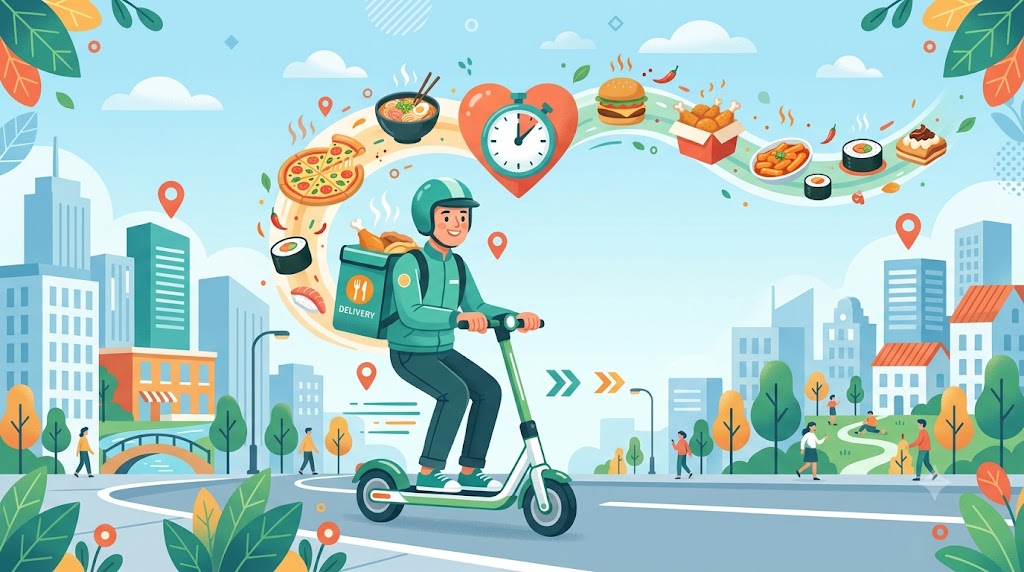
South Korea is famous for having the fastest, most convenient food delivery (Baedal, 배달) culture on the planet. From late-night fried chicken and steaming bowls of jjajangmyeon to fresh groceries delivered to your door within an hour, getting food delivered is a staple of daily life here.
Here is how to navigate Korea’s food delivery apps and get meals straight to your doorstep without getting stuck at the payment screen.
Phase 1: Choosing the Right App
While there are dozens of delivery platforms in Korea, foreigners typically rely on these top options:
- Baedal Minjok / Baemin (배달의민족): Korea’s #1 delivery platform with the widest selection of local restaurants, bakeries, and convenience stores. While primarily in Korean, it is very intuitive once you learn the basic category icons.
- Yogiyo (요기요): Baemin’s main competitor, offering frequent discount coupons and a clean layout.
- Coupang Eats (쿠팡이츠): Extremely fast single-order deliveries (drivers carry only your order directly to you) and features the most comprehensive English interface among major Korean apps.
- Shuttle Delivery: A fully English-language delivery service catering specifically to expats in areas like Itaewon, Pyeongtaek, and Songdo, accepting international credit cards directly.
Phase 2: Solving the Payment & Identity Hurdle
The biggest challenge foreigners face on standard Korean delivery apps is identity verification (Bonin Injeung, 본인인증) and local payment methods.
- Foreigner Name Match: If an app requires identity verification, your name must match exactly how it appears on your Alien Registration Card (ARC) and your Korean SIM card registration (usually
LASTNAME FIRSTNAME MIDDLENAMEin ALL CAPS). - Payment Methods: Most apps accept Korean Check Cards, Kakao Pay, Naver Pay, and Toss Pay.
- Pay on Delivery (만나서 결제): If you don’t have a verified Korean mobile number or local bank card yet, select the “Pay on Delivery” option in the checkout screen (available on select apps and restaurants). You can pay the delivery rider directly with your physical card or cash at your door.
Phase 3: Entering Your Address Correctly
Korean addresses can be tricky for newcomers. To avoid sending your dinner to the wrong neighborhood:
- Use the Road Name Address (도로명주소): Korea switched to a street-and-building-number system. Look up your building’s official English/Korean road name address on your lease.
- Detail Address (상세주소): Don’t forget to add your building name, floor, and unit number (e.g., 101-dong 402-ho or B01-ho).
- Door Passcode (공동현관 비밀번호): If your villa or apartment building has a secure ground-floor keypad, write the code in the “Notes to Courier” (라이더 요청사항) box (e.g.,
#1234#orKey 1234 종).
Golden Tips for Seamless Ordering
- Leave at the Door (문 앞에 두고 가세요): Most people prefer contactless delivery. Select this standard checkbox during checkout, and the rider will place your food outside your door, ring the bell once, and leave.
- Side Dishes & Cutlery (수저포크): Apps default to not sending disposable spoons and chopsticks to reduce plastic waste. If you need plastic cutlery, check the box for Soojeo (수저 포함).
- Trash Etiquette for Chinese/Traditional Delivery: If you order traditional Chinese food that arrives in reusable hard-plastic bowls and melamine plates (not disposable plastic containers), do not throw them away! Place the dirty bowls back in the blue vinyl bag provided and leave it outside your door. The restaurant will return to collect and wash them later.