
Heating, Cooling & Utility Bill Hacks in Korea: How to Save on Ondol Boilers, AC & Bills

🇰🇷 Essential Living in Korea Deep-Dive
South Korea experiences four dramatic seasons—from freezing, dry winters to humid, tropical summers. For newcomers living in a Korean apartment or studio (One-room), running the heating or air conditioner the wrong way can lead to shocking seasonal utility bills.
Because Korea uses underfloor Ondol water-pipe heating and tiered residential electricity rates (Nujinje), knowing how to operate your thermostat and set up mobile auto-payments saves hundreds of thousands of won every year.
In this complete guide, we cover the 3 essential seasonal energy and utility bill rules every foreign resident in Korea should know.
Complete Guide to Heating, Cooling & Utility Bills in South Korea
Living in Korea and want to stay comfortable year-round without high bills? 🇰🇷✨
Follow these 3 key steps & rules to manage your utilities like a true local!
#1 Master Ondol Boiler Modes in Winter (온돌 보일러 절약법)
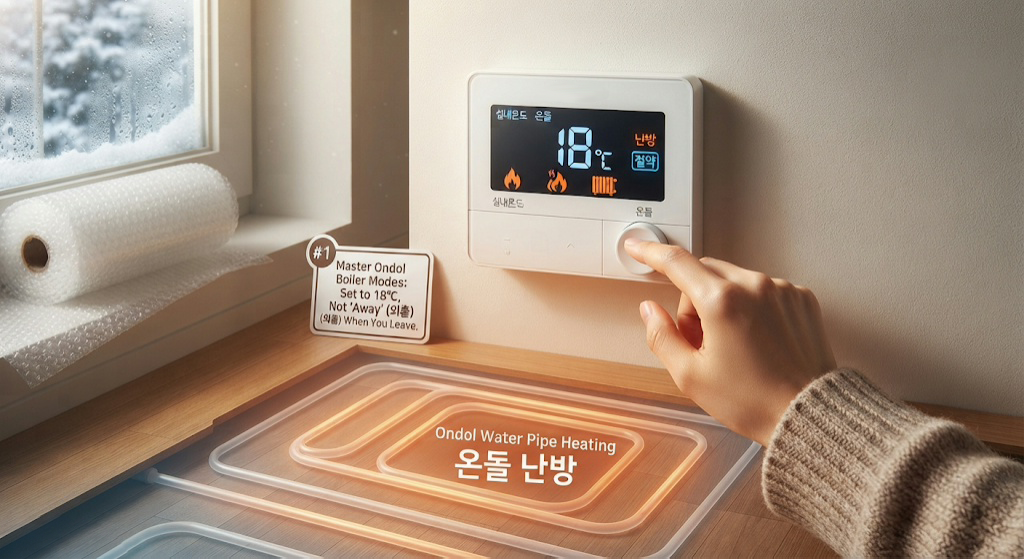
💡 Why it matters: Korean homes use underfloor hot-water pipes (Ondol) powered by city gas. Pressing the “Away” button (외출 / Oechul) every morning lets the water cool completely, forcing the boiler to burn massive amounts of gas to reheat the floor from scratch when you return.
🕒 How to do it: When leaving for work or class during winter, simply lower your room temperature setting by 2–3°C (to around 17–18°C) instead of turning the boiler off. Reserve the Oechul mode only for multi-day trips away from home.
💬 Pro Tip: Apply insulating bubble wrap (Ppokppoki) to single-pane windows and keep bathroom doors closed to trap floor warmth and reduce winter gas bills by up to 20%.
#2 Optimize Inverter AC Usage in Summer (인버터 에어컨 절전법)
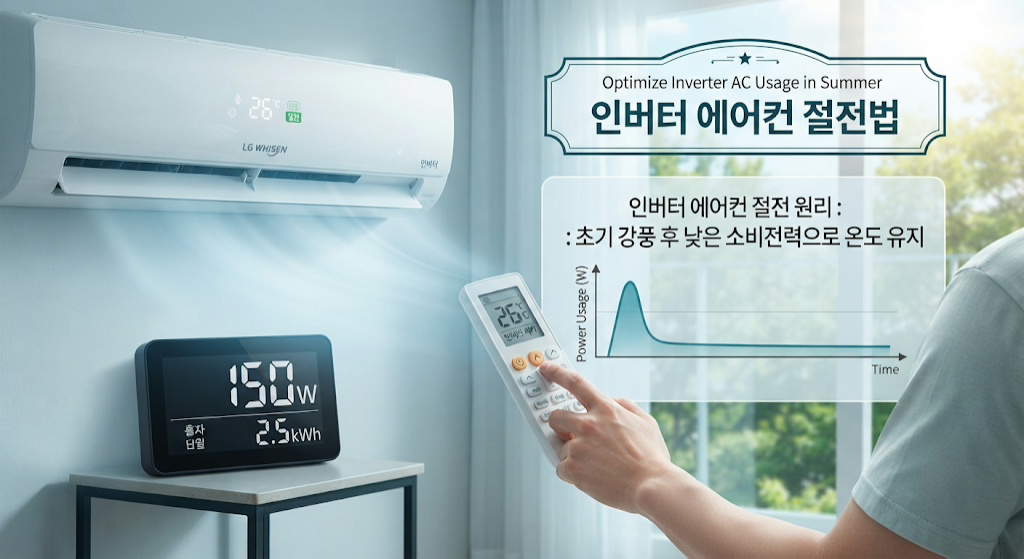
💡 Why it matters: South Korea enforces a progressive residential electricity pricing system (누진제 / Nujinje), meaning rates jump sharply once monthly kWh thresholds are crossed. Modern inverter air conditioners consume the most electricity during startup—so turning the AC on and off every hour actually wastes power.
🕒 How to do it: Turn your inverter AC on at a low temperature (18–20°C) with high fan speed for the first 15 minutes to cool the room quickly, then raise the setting to a steady 25–26°C and leave it running continuously paired with an air circulator or fan.
💬 Pro Tip: Rinse the removable mesh dust filter inside your indoor AC unit every two weeks—a clean filter improves airflow and cuts cooling electricity usage by up to 15%.
#3 Track & Auto-Pay Korean Utility Bills (공과금 자동이체 및 관리)
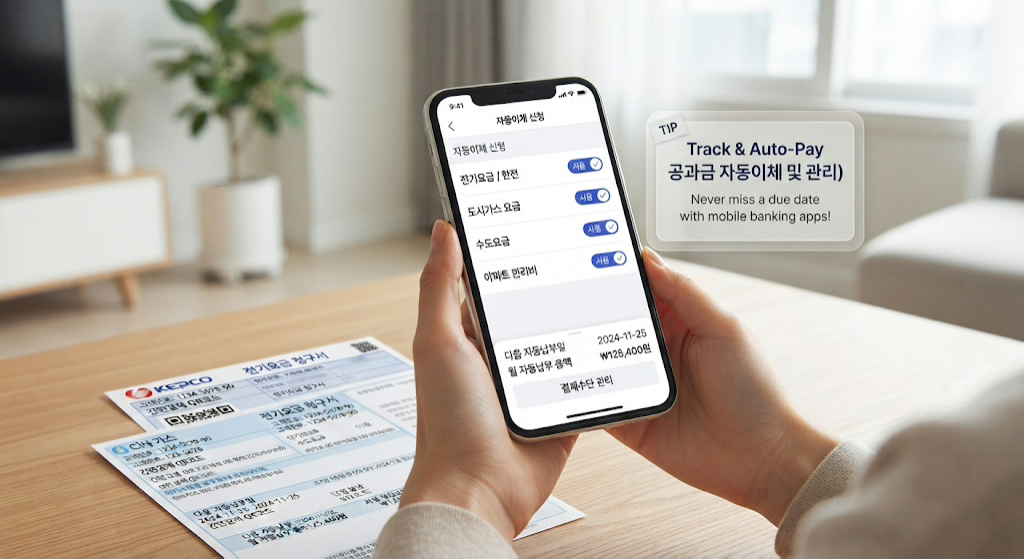
💡 Why it matters: Depending on your housing contract, electricity (KEPCO), city gas (도시가스), water, and building maintenance (관리비) may arrive on separate paper bills in your mailbox. Missing a due date triggers automatic late fees and service warnings.
🕒 How to do it: Find the 10-to-12-digit customer number (고객번호) printed on each paper bill and register it in KakaoPay, Toss, or your Korean banking app to receive mobile notifications and set up automatic monthly bank transfers (자동이체 / Jadong-iche).
💬 Pro Tip: When moving out of an apartment, call your local city gas company (e.g., 1544-3131 in Seoul) 2–3 days in advance to schedule a final meter reading and pay your exact closing balance on moving day.
🇰🇷 BKORS LIVING IN KOREA GUIDE
Ready to Make Life in Korea Easier?
From essential daily life hacks to local services and Korean slang, we help foreign residents thrive in South Korea. Bookmark BKORS.com and stay tuned for our next guide!