🏮 Living Info
How to Survive the Korean Garbage and Recycling System

jaeho0707 Aug 28, 2026
⏱️ 4 min read
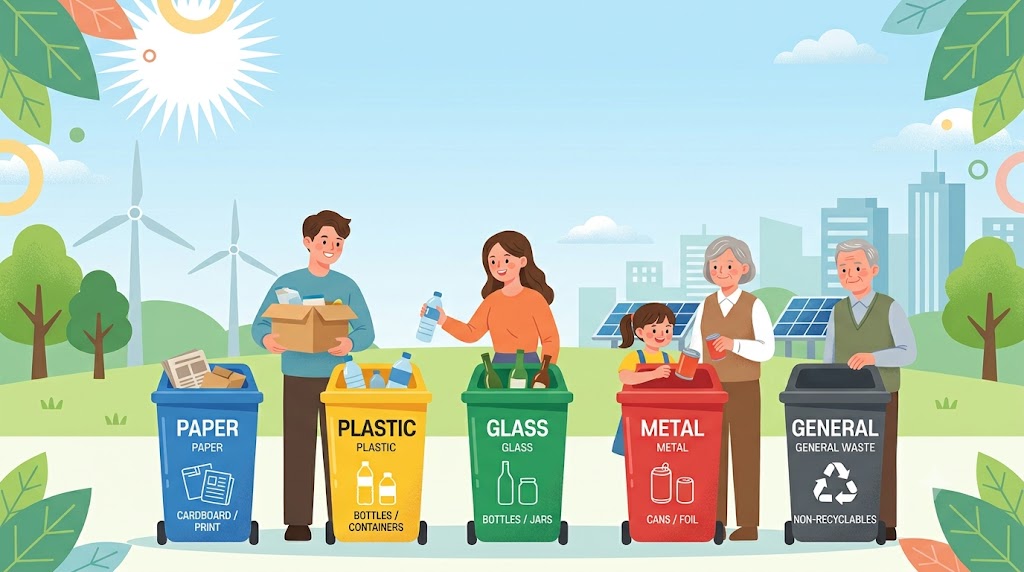
Throwing away trash in South Korea can feel like taking a pop quiz in environmental science. The country has one of the strictest and most efficient waste management systems in the world. Failing to sort your garbage properly isn’t just frowned upon—it can actually result in hefty fines and uncollected trash piling up outside your door.
Phase 1: The Pay-as-You-Trash System (Jongnyangje)
You cannot throw your general or food waste into random shopping bags. You must purchase official, district-specific garbage bags, known as Jongnyangje (종량제).
- Where to buy them: Any local convenience store (GS25, CU, 7-Eleven, Emart24) or supermarket. Just ask the cashier for Sseuregi-bongtu (쓰레기봉투).
- District-specific: A bag bought in Gangnam cannot be used in Hongdae. Always buy bags in your specific neighborhood.
- Sizes: They range from 5 liters to 75 liters. For single households, 10L or 20L bags are usually the most practical.
Phase 2: The Three Main Categories
Before taking anything outside, you need to separate your waste into three distinct groups:
- General Waste (일반 쓰레기): Goes into the standard official district bag (usually white or green). This includes tissues, used paper towels, dirty packaging that can’t be washed, and hard animal remains like bones or clam shells (which are not considered food waste).
- Food Waste (음식물 쓰레기): Goes into special food waste bags (often yellow, though colors vary by district) or a designated RFID bin in your apartment complex. Rule of thumb: If an animal can theoretically eat it, it’s food waste. Onion skins, eggshells, and tea bags belong in General Waste.
- Recycling (분리수거): Does not go in an official bag. You can carry it down in any bag or box and separate it directly into the designated bins in your building’s sorting area.
Phase 3: Sorting Your Recycling Like a Local
Korean recycling bins are highly specific. When you take out your recyclables, you will typically see separate containers for:
- Paper (종이류): Flatten all cardboard boxes. You must completely remove any delivery tape or shipping labels.
- Plastics (플라스틱류): Must be empty and rinsed. Crucial step: You must peel off the vinyl labels from plastic water bottles before recycling them. Most Korean bottles now have easy-peel perforated lines for this exact reason.
- Vinyl (비닐류): This is a unique category in Korea. Snack bags, bubble wrap, plastic grocery bags, and cling wrap all go into a dedicated vinyl bin.
- Glass & Cans (유리/캔): Rinse them out. Do not put broken glass in the recycling bin—wrap broken glass safely in thick newspaper, put it in a separate sturdy bag, and throw it in general waste.
Golden Tips for Your Routine
- Know your schedule: If you live in a villa or standalone housing area (not a high-rise apartment), you can only take your trash out on specific days of the week, usually after sunset. Check with your landlord or building management for your exact schedule.
- Bulky Item Stickers: Throwing away a broken chair, microwave, or mattress? You cannot just leave it on the street. You must buy a bulky waste sticker (대형폐기물 스티커) from your local district office (Gu office), neighborhood community center, or local convenience store, attach it to the item, and leave it out.
- Grease ruins recycling: If your recycling is contaminated with food residue (like a greasy pizza box or a stained takeout container), it is no longer recyclable. Rip off the greasy parts for general waste and recycle only the clean cardboard or plastic.